

If you’re a West Michigan homeowner, you know we get every kind of weather—it could be snowing one day and 70 degrees the next! No matter the weather, rain and snow can cause drainage problems on even the most immaculate lawns. Water accumulation, wet basements, soggy lawns and even erosion around your home can wreak havoc on your property.
At Torchwood Landscaping, we typically recommend a French drain system for lawn problems like this. Let’s break down some signs your lawn (and foundation!) may be begging for a French drain system.
What is a French Drain System?
First things first: let’s make sure we’re all on the same page about what a French drain is.
A French drain is a trench filled with gravel or rock that contains a perforated pipe. This pipe collects the water and helps direct the water away from problem areas like the foundation of your home, low-lying areas of your yard or anywhere else water tends to pool. It’s a reliable solution for redirecting excess water to an area where it can safely drain away from your property.
Now that we know what a French drain is, let’s get into how you can tell if you need one at your property.
Signs You Need a French Drain System
1. Water in Your Yard
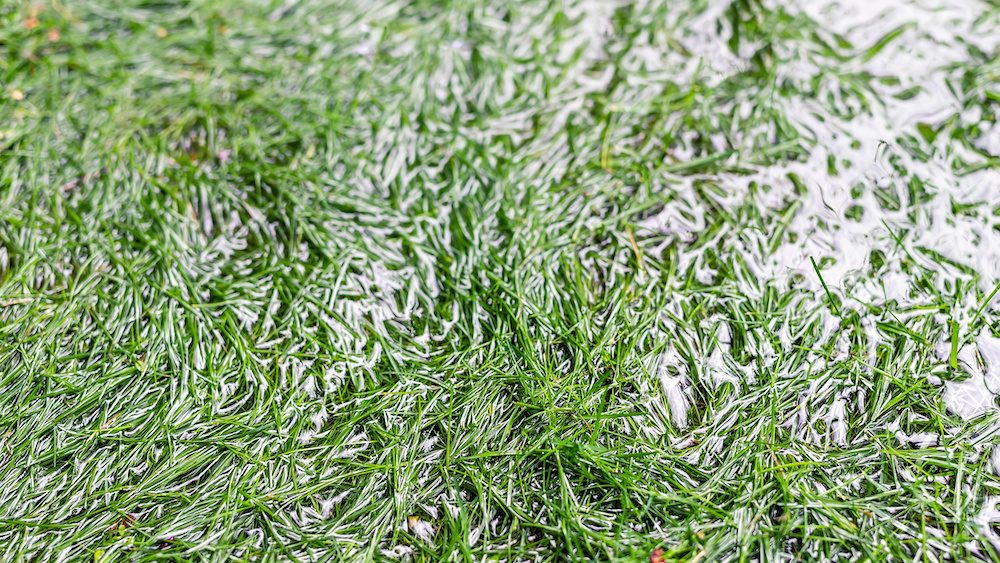
If your yard holds water every time it rains, you’re already familiar with this problem. Perhaps after a rainstorm you find certain areas of your lawn get flooded and take a long time to dry up. Standing water can create other problems like soggy grass, mud and even attract pests.
Water in your yard is a sign the soil can’t absorb the water fast enough and a French drain could redirect this water to a more suitable location.
2. Water in Your Basement or Crawl Space
Have you ever walked into your basement and found it musty or there’s water in certain areas? It’s a problem many West Michigan homeowners face, especially after heavy rain or melting snow. Sometimes the water even seeps into your crawl space, creating an environment that could encourage mold and mildew growth.
If water keeps getting into your basement or crawl space, you shouldn’t ignore it. You may need a French drain system to reroute the water around your foundation before it causes further damage to your home’s structure.
3. Erosion and Settling Around Your Foundation
Take a look around your property. Is the soil low around your foundation? If so, that could be a sign the water is flowing towards your house instead of away from it. Erosion happens when water moves or compacts soil. Over time, it can undermine the structural integrity of your foundation.
This is a big deal if the erosion/settling is getting closer to your home. A French drain can be installed to redirect the water away from the foundation and protect your investment.
4. Saturated Soil Around the Foundation
A wet yard can cause more than just a soggy lawn. When the soil around your foundation is consistently wet it can seep into the walls of your basement or crawl space. It’s not only uncomfortable, but it also puts pressure on your foundation, which can lead to cracks over time.
If you notice the soil is consistently wet around your foundation, it might be time to consider installing a French drain. The drain would carry the water away from your foundation, reducing the pressure and preventing long-term damage.
5. Water Overflowing From Gutters
Gutters that aren’t draining properly can contribute to a host of water problems around your home. If your gutters overflow during heavy rain and the water pours directly onto the ground near your foundation, that water will likely accumulate around the base of your house.
Instead of relying solely on your gutters, you may need to redirect the water using a French drain. This will allow the water to flow away from your house and protect the foundation and prevent flooding in your basement.
6. Unexplained Dampness in the Yard
It’s one thing to have standing water in your yard after a heavy rain but if you notice your yard is constantly damp without any major rainfall, it could mean water is accumulating beneath the surface.
In West Michigan, where the clay content of the soil can create drainage issues, underground water problems can persist even when there’s no visible rainfall. A French drain can eliminate those damp areas by allowing water to drain more efficiently.
7. Low Spots in Your Yard That Are Always Wet
Do you have areas of your lawn that are always wet even if it hasn’t rained recently? Low-lying areas of your yard can trap water, making them appear damp even in dry conditions. This is common in areas where the grading of the land isn’t ideal and the water tends to flow towards those lower sections.
A French drain could be installed in those low spots to move water away from the area and create better drainage throughout your entire lawn.
How a French Drain System Works

Once you’ve identified the signs you need a French drain system, it’s important to understand how it will work. Essentially, a French drain collects water in the trench, filters it through the gravel, and allows the perforated pipe to carry the water to a designated drainage area. This alleviates the pooling of water, reduces the pressure on your foundation, and prevents erosion.
For areas with poor natural drainage or soil that’s less permeable, a French drain provides a solution to redirect excess water and keep your property safe from water related damage.
The French Drain Process
If you’ve decided a French drain might be right for you, here’s a general overview of the process:
1. Planning and Assessment
First, we’ll determine the best location for the drain. We’ll assess your property to find out where the water is coming from and where it needs to go. We’ll take note of the grade of your lawn and make sure the system will work.
2. Trenching
We’ll dig a trench where the French drain will go, ensuring it’s sloped correctly (1-2%) to allow water to flow away from your foundation or the areas where water tends to pool.
3. Installing the Pipe
A non-woven fabric is placed in the trench. Then a perforated pipe is placed in the trench. This pipe has holes that allow water to enter and travel through it. The pipe is then surrounded by gravel to help filter the water.
4. Covering the Pipe
The top of the trench is covered with the fabric and pinned together. Then, it is covered with soil and in many cases, grass is planted over the area to make the French drain invisible.
DIY vs. Professional Installation
You might be wondering if you can install a French drain yourself. While it’s certainly possible for a skilled DIYer to take on a project like this, there are a few reasons why you might want to consider hiring a professional drainage expert like Torchwood Landscaping:
- Proper Drainage Planning: We know how to assess your property’s water flow patterns and make sure the drain is installed at the right depth and angle. Equipment and
- Materials: Installing a French drain requires specific equipment and materials. Professionals have the tools needed to do the job efficiently and effectively.
- Long-Term Results: By hiring a professional, you ensure the job is done right the first time avoiding costly repairs down the road.
Don’t Leave Your Drainage Up to Chance!
If you’re experiencing any of the drainage issues above—whether it’s pooling water, basement leaks or erosion—it might be time to consider a French drain. It’s a long-term solution that will keep your property safe from water damage.
At Torchwood Landscaping, we’ve helped countless homeowners across West Michigan solve their drainage problems. If you’re ready to take control of your yard’s water flow we’re here to help. Contact us today for a consultation and let’s find the best solution for your home.